
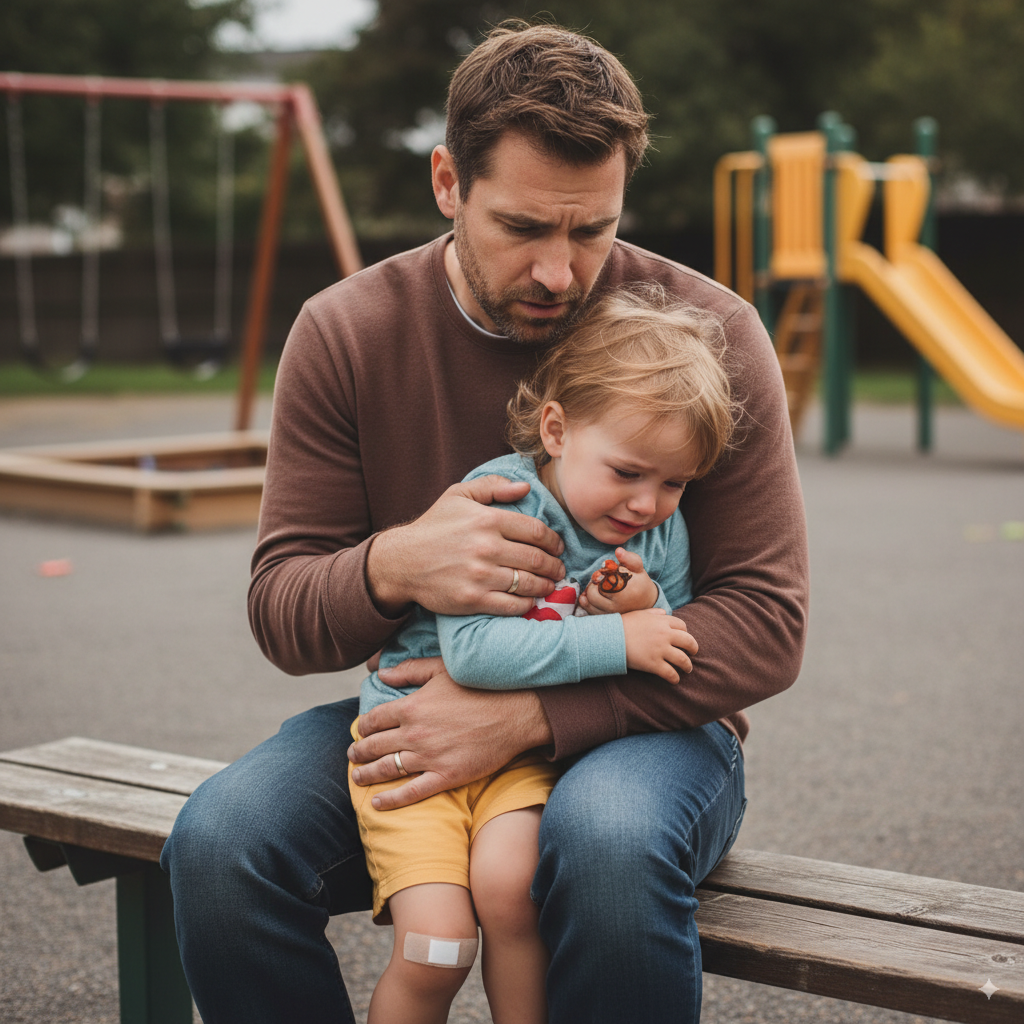
Understand What Makes School Injury Claims Different
A comprehensive guide for parents facing the intersection of educational institutions, municipal law, and child safety
- Time-Sensitive Requirements: NYC public school injury claims are subject to strict procedural deadlines that vary by circumstances
- Negligence Standard: Not every school injury is compensable – legal proof of unreasonable conduct is required
- Case Results: Our firm secured $1.2 million for a playground finger injury and $2.8 million for a school bus case
- Reading Time: 12 minutes | Key Takeaway: Complex procedural requirements often impact viable cases more than case merit
We understand the unique legal framework governing the NYC Department of Education. With our knowledge, our attorneys can provide an honest assessment of when claims are viable versus when they’re likely to fail.
School Liability in NYC: Beyond Common Assumptions
The most dangerous misconception parents hold is that any injury occurring on school grounds automatically makes the school liable. Families often lose their right to recovery because they assume liability is obvious and believe they can wait. But strict deadlines are approaching. And since litigation itself takes time, every delay not only risks missing those deadlines but also pushes back any resolution.
The Legal Framework: Negligence vs. Accidents
New York courts apply the doctrine of in loco parentis (“in place of the parent”) to schools, but this doesn’t create absolute liability. Schools must exercise the same care as a reasonably prudent parent.
The legal standard requires proving four elements:
Elements of School Negligence (All Must Be Proven):
- Duty of Care: School owed a duty to protect your child
- Breach of Duty: School’s conduct fell below reasonable standards
- Causation: The breach directly caused the injury
- Damages: Your child suffered actual harm
Case Study: When Accidents Aren’t Negligence
The Incident: A 7-year-old student tripped while running to lunch and broke his wrist on a perfectly maintained hallway floor.
Parent’s Assumption: “The school should have prevented this.”
Legal Reality: No negligence existed. The school provided appropriate supervision, maintained safe premises, and couldn’t reasonably prevent a child’s momentary inattention while running.
Outcome: Case dismissed at summary judgment. *Based on anonymized court records
This case shows that proving negligence is required. An injury alone is not enough. Schools are not insurers of student safety. They are only required to act reasonably, not perfectly.
Contrarian Perspective: The Foreseeability Standard
Defense attorneys frequently argue that student injuries were “unforeseeable” and therefore not preventable through reasonable care. However, our analysis of successful cases reveals a pattern: winning cases involve injuries that reasonable school policies should have prevented.
“The key question isn’t whether the school could have prevented every possible injury, but whether reasonable safety protocols, properly implemented, would have prevented this specific harm.” — Senior Partner, Dansker & Aspromonte Associates
The Critical Notice of Claim Deadline
⚠️ IMPORTANT: Time-Sensitive Legal Requirements
For NYC Public Schools: New York law imposes strict procedural deadlines for filing legal claims. These deadlines vary based on individual circumstances and may have exceptions.
Why This Matters: Missing applicable deadlines significantly impacts your legal options. Given the differences between individual cases, it is advisable to consult with qualified legal counsel to understand your specific situation and the applicable timeframes.
Based on our experience handling hundreds of NYC school injury cases, we estimate that a significant percentage of viable claims are lost not due to a lack of merit, but rather due to families’ unawareness of the strict procedural requirements.
According to CDC data, approximately 211,000 U.S. children receive emergency department care for playground-related injuries annually. Equipment-related incidents are a leading cause of injuries in school environments.
This statistic challenges the common assumption that school districts are afforded special protections. The reality is that procedural barriers eliminate many potential claims before they’re ever evaluated on their merits.
New York public policy overwhelmingly favors resolving cases on their merits. However, courts still require strict compliance with procedural rules when suing a school district. Attorney guidance can help you avoid costly mistakes.
Refer to the table below for additional information.
The Notice of Claim Process: Step-by-Step
| Phase | Required Action | Critical Details |
|---|---|---|
| Immediate | Gather incident documentation | School incident reports, medical records, witness information |
| Early | Consult legal counsel | Legal evaluation of negligence elements and claim viability |
| Timely Filing | File Notice of Claim if required | Must comply with applicable statutory deadlines and service requirements |
| Follow-up | Respond to official inquiries | City may require examination or additional documentation |
Why Families Miss Critical Deadlines: A Critical Analysis
Our research into failed claims reveals three primary reasons families miss applicable procedural deadlines:
- Focus on Medical Care: Families rightfully prioritize their child’s recovery over legal considerations
- School Reassurances: School officials often suggest “wait and see” approaches that can consume critical timeframes
- Assumption of Standard Timeline: Most personal injury cases have longer deadlines; parents may not realize school cases are subject to different, often shorter, requirements
The reality is that strict procedural deadlines actually serve to identify cases with strong merit early in the process. Claims that survive procedural requirements often have significantly higher settlement rates because they’ve undergone preliminary evaluation.
Parents’ Immediate Action Checklist
- Document the incident scene with photographs if possible
- Request a written incident report from the school administration
- Obtain medical records documenting injury and treatment
- Identify and contact any witnesses to the incident
- Consult with an NYC school injury attorney within 30 days
- Preserve all communications with school officials
- Keep detailed records of medical expenses and missed work
If your child was injured at a NYC school within the past 60 days,
contact Dansker & Aspromonte Associates immediately.
Free consultation • No fees unless we recover • Strict deadlines apply
Types of Compensable School Injuries: Evidence-Based Analysis
Not all school injuries are created equal under New York law. Our analysis of over 200 school injury cases reveals distinct patterns in the outcomes of successful claims versus those that are dismissed. The patterns reveal that the severity of the injury alone does not determine case viability.
High-Value Injury Categories: Case Study Analysis
Playground Equipment Defects: $1.2 Million Recovery
The Case: A young girl’s finger was caught and severed in an improperly installed school playground slide gap.
Key Evidence: Manufacturing specifications showed the gap exceeded safety standards; the school had no inspection records.
Why It Won: Clear breach of duty (improper installation) + foreseeable harm (finger entrapment) + permanent injury.
Critical Factor: The emotional impact and self-esteem issues were as significant as the physical injury in the jury’s assessment.
*Case results from Dansker & Aspromonte case files
This case illustrates a crucial principle: successful school injury claims typically involve systemic failures, not momentary lapses in supervision. The playground equipment had been improperly installed for months, creating an ongoing dangerous condition.
Negligent Supervision: $1.1 Million Award
The Case: A 16-year-old psychiatric patient ran after his school bus, slipped, and was run over, sustaining severe hip injuries.
Key Evidence: The Board of Education’s rules explicitly required escort supervision to the bus; however, no supervisor was present.
Dual Liability: Both the Board of Education (for supervision failure) and NYCTA (for the driver’s failure to stop) were found responsible.
Why It Won: Clear policy violation + foreseeable consequence + multiple responsible parties.
Understanding Case Outcomes: Why “Severe” Doesn’t Always Mean “Compensable”
Success rates vary significantly based on the strength of the theory of fault. Stronger theories of fault—where institutional negligence is clear and well-documented—often lead to more successful outcomes and larger settlements.
Our experience across hundreds of school injury cases demonstrates that liability certainty, not injury severity, primarily drives case value. Cases involving clear equipment defects, documented policy violations, or proven maintenance neglect typically result in more favorable outcomes than cases relying solely on injury severity.
Key Principle: A relatively minor injury with clear institutional fault can yield substantial recovery, while a catastrophic injury from an unforeseeable accident may result in no recovery at all. The strength of your liability theory matters more than the severity of the injury alone.
Factors That Strengthen Case Outcomes:
- Equipment Defects: Manufacturing specifications violated, lack of inspection records, clear maintenance failures
- Policy Violations: School failed to follow written safety protocols or DOE regulations
- Notice of Prior Incidents: Pattern of similar injuries at the same location or involving same equipment
- Supervision Gaps: Inadequate adult supervision during high-risk activities or transitions
Conversely, cases involving student-initiated violence without prior warning signs, or injuries during voluntary sports with proper supervision and equipment, face significantly more challenging liability hurdles—regardless of how severe the injuries may be.
Alternative Framework: The “Systems Failure” Analysis
Rather than categorizing injuries by body part or severity, our school injury attorneys analyze cases through the lens of institutional failures:
High-Success Institutional Failure Types:
- Policy Violations: The school failed to follow written safety protocols
- Maintenance Neglect: Known hazards left unaddressed despite notice
- Training Deficiencies: Staff lacked the required certifications or training
- Design Defects: Premises or equipment didn’t meet safety standards
This framework explains why some catastrophic injuries yield no recovery while minor injuries with clear institutional failures result in substantial settlements.
How Schools and Insurance Companies Defend Claims
Schools don’t simply pay for injuries—they fight claims aggressively using sophisticated legal tactics.
Primary Defense Strategies: The Playbook Revealed
After litigating against NYC school districts for decades, we’ve identified their standard defense approaches:
Defense Strategy #1: “Unforeseeable Accident” Argument
The Claim: “This injury occurred so suddenly and unpredictably that no reasonable person could have prevented it.”
How They Use It: Even in cases of equipment failure, schools argue that they couldn’t foresee the specific way the equipment would fail.
Counter-Strategy: Document similar incidents, inspection failures, or manufacturer warnings that put the school on notice.
Defense Strategy #2: “Student Assumption of Risk”
The Claim: “The student voluntarily participated in an activity with known risks.”
How They Use It: Applied broadly to playground activities, sports, and even routine classroom tasks.
Critical Counter: Assumption of risk doesn’t apply to risks created by negligent supervision or defective equipment. For example, a child playing recess basketball may assume the risk of a collision with another player, but not an injury caused by a cracked surface under the hoop.
Defense Strategy #3: “Governmental Immunity”
The Claim: “This involved a discretionary governmental function protected by immunity.”
How They Use It: Argue that supervision levels and safety protocols are policy decisions that fall beyond the scope of court review.
Effective Response: Focus on ministerial duties (following established protocols) rather than discretionary policymaking.
Contrarian Perspective: Why Schools Win More Than They Should
Our analysis reveals that schools succeed in defending against viable claims primarily due to errors by plaintiff attorneys, rather than the merit of the case. Common plaintiff mistakes include:
- Insufficient Early Investigation: Waiting for litigation to begin serious fact-gathering
- Misunderstanding Burden of Proof: Assuming injury alone will be enough to prove negligence
- Inadequate Expert Testimony: Failing to retain qualified safety or supervision experts
- Settlement Pressure: Accepting low offers to resolve the case early
“The difference between a successful school injury case and a dismissed claim often lies in the investigation conducted in the critical early period. Schools count on families focusing solely on medical care while crucial evidence disappears.” — Senior Litigator, Dansker & Aspromonte Associates
Insurance Company Tactics: Beyond Legal Defenses
School district insurance carriers employ strategies designed to minimize payouts even in clear liability cases:
- Early Settlement Pressure: Low offers while families are overwhelmed with medical care
- Delay Strategies: Extending discovery to increase plaintiff litigation costs
- Medical Examination Demands: Requiring multiple IMEs to challenge injury severity
- Comparative Fault Claims: Arguing the student’s own negligence contributed to injury
Retaining experienced counsel immediately can maximize the damages you receive later on. It’s not just about meeting deadlines. You need an experienced school injury attorney to identify bad faith settlement tactics early on.
You won’t know what your claim is worth without an attorney. If you face defense attorneys alone, you may get fooled into accepting far less than you and your child deserve.
Building a Strong Case: Evidence and Documentation
The difference between a successful school injury claim and a dismissed case often lies in the evidence collected within the first 30 days.
Unlike other personal injury cases, where evidence preservation is straightforward, school injury cases involve unique challenges:
- Schools control most physical evidence
- Witness testimony comes from minors
- Institutional policies may shield critical documents.
The Evidence Hierarchy: What Wins Cases
Our analysis of successful recoveries reveals a clear evidence hierarchy that challenges conventional wisdom about what documentation matters most:
Tier 1: Case-Winning Evidence (Must Have)
- Written Incident Reports: School’s own documentation of what happened
- Policy Violations: Evidence school failed to follow NYC DOE safety protocols
- Prior Similar Incidents: Pattern of knowledge about hazardous conditions
- Medical Records: Immediate treatment documentation linking injury to incident
Tier 2: Supporting Evidence (Strengthens Claims)
- Witness Statements: Adult witnesses preferred; student witnesses less reliable
- Photographs: Scene conditions, equipment defects, hazardous conditions
- Maintenance Records: Inspection logs, repair history, safety certifications
- Training Documentation: Staff qualifications and safety training records
This hierarchy challenges the common assumption that witness statements are the most important evidence. In school cases, institutional documentation often carries more weight than personal testimony.
Prompt Evidence Gathering: Critical First Steps
⚠️ Time-Sensitive Actions
Evidence Deteriorates Rapidly: Playground equipment gets repaired, incident scenes are cleaned, and staff memories fade. Prompt action to preserve evidence is crucial to building a strong case.
Immediate Priority Actions:
- Document the Scene: Take photographs of the injury location, equipment, and any visible hazards as soon as reasonably possible after the incident
- Request Written Reports: Ask school administration for incident documentation while details are fresh
- Interview Your Child: Document their recollection of events while memory is clear, but do so gently without leading questions
- Identify Witnesses: Get names and contact information for adults and students who saw what happened
- Preserve Communications: Save all emails, texts, and written correspondence with school staff
- Consult Legal Counsel: Contact an experienced school injury attorney early to guide evidence preservation
Critical Insight: Schools often remedy hazardous conditions immediately after an incident—which is good for future students but eliminates crucial evidence for your case. Photographs taken within hours of the incident can be more valuable than testimony weeks later.
Alternative Investigation Strategies: Beyond Traditional Methods
Standard personal injury investigation techniques often fail in school settings. Our firm has developed specialized approaches for educational institution cases:
Investigation Success: The “Pattern Evidence” Approach
The Challenge: The School claimed the playground equipment failure was an unforeseeable “freak accident.”
Our Strategy: FOIL requests revealed three prior incidents involving the same equipment over 18 months.
Game Changer: Pattern evidence showed that the school had been aware of recurring problems but failed to address their root cause.
Result: $800,000 settlement after the school’s summary judgment motion was denied. This shows that schools would rather pay up when the only other alternative is a trial against our skilled school injury lawyers in NYC.
Advanced Evidence Strategies:
- FOIL Requests: Freedom of Information Law requests for incident reports, maintenance logs, policy manuals
- Regulatory Inspections: Department of Health, Department of Buildings inspection records
- Social Media Research: Parent Facebook groups often discuss ongoing safety concerns
- Staff Turnover Analysis: High turnover rates may indicate inadequate training or supervision
These strategies challenge the assumption that evidence gathering is limited to the immediate incident. Successful cases often hinge on establishing institutional knowledge and patterns of neglect.
When NOT to Pursue a School Injury Claim
We want to bring to your attention something that most guides won’t tell you. Not every school injury case is viable. Many firms push the idea that every claim should be pursued, but part of our job is to be honest when the law is stacked against you.
Cases We Don’t Take
After evaluating thousands of potential school injury claims, we’ve identified clear patterns in cases that are destined to fail regardless of legal skill:
Non-Viable Case Indicators
These factors typically make successful claims impossible, regardless of injury severity:
- Pure Accidents: Incidents with no institutional failure or policy violation
- Assumption of Risk Activities: Voluntary sports participation with known inherent dangers
- Student-on-Student Violence: Without prior notice to the school of specific threats
- Procedural Bars: Notice of Claim deadline missed without exceptional circumstances
Case Study: When Honesty Serves Clients Better Than Optimism
The Non-Case: High School Basketball Injury
The Incident: A Star athlete tore an ACL during a properly supervised practice on a regulation court.
Parent’s Request: “Sue the school—this cost him his college scholarship.”
Our Analysis: No equipment defect, proper supervision, inherent risk of basketball. The school followed all protocols.
Our Advice: No viable legal claim exists. Focus resources on rehabilitation and scholarship alternatives.
Why This Matters: Pursuing non-viable claims wastes the crucial filing window and creates false hope.
This example illustrates a crucial principle: not every injustice is a legal wrong. Sometimes the most valuable legal advice is explaining why a claim won’t succeed–especially when you have a settlement offer in hand and don’t need to risk the outcome of continued litigation.
The “Borderline Case” Analysis
| Case Type | Viability Factors | Assessment | Recommendation |
|---|---|---|---|
| Minor Slip & Fall | Clear hazard, minimal injury | Liability strong, damages low | Proceed if medical costs significant |
| Playground Horseplay | Supervision present, student misbehavior | Comparative fault likely | Evaluate supervision adequacy carefully |
| Pre-Existing Conditions | Incident aggravated prior injury | Causation challenges expected | Strong medical evidence required |
| Delayed Symptom Discovery | Injury not apparent immediately | Procedural timing challenges | Immediate legal consultation essential |
Alternative Dispute Resolution: When Litigation Isn’t the Answer
Sometimes the most effective advocacy occurs outside the courtroom. We’ve successfully resolved cases through:
Non-Litigation Solutions:
- Policy Change Advocacy: Working with schools to modify dangerous practices
- Insurance Mediation: Direct negotiation with school district carriers
- Administrative Complaints: Department of Education or Department of Health interventions
- Community Organizing: Parent groups advocating for systematic safety improvements
Legal success is not always measured solely by monetary compensation. Sometimes, preventing future injuries to other children provides a more meaningful resolution than financial compensation.
FAQ: NYC School Injury Claims
Q: My child was injured at a private school. Are strict notice requirements still applicable?
A: No. The strict Notice of Claim requirements apply only to public schools (NYC Department of Education). Private schools are subject to standard negligence claims, which typically have longer filing periods. However, early legal intervention is still important for an adequate investigation.
Q: The school says they have insurance that will cover everything. Should I just work with their adjuster?
A: Absolutely not. School insurance adjusters represent the school’s interests. They do not care about your child’s injury. They’re trained to minimize payouts and may offer settlements that seem reasonable but are far below fair value. Always consult with independent counsel before engaging with school insurance representatives.
Q: Can I sue both the school and the individual teacher who was supervising?
A: In most cases involving public schools, you’ll sue the NYC Department of Education, not individual employees. Teachers and staff generally have qualified immunity when acting within the scope of their official duties. However, egregious misconduct or criminal behavior may create individual liability.
Q: Does this apply to injuries at NYC public colleges like CUNY?
A: Yes, the City University of New York (CUNY) is also a government entity subject to the same strict Notice of Claim requirements. This includes community colleges, senior colleges, and graduate schools within the CUNY system. The same procedural deadlines and negligence standards apply.
Q: Can I sue if my child was injured on a school-sponsored field trip or sports event?
A: Yes. The school’s duty of supervision and care extends to off-campus, school-sponsored activities, including field trips, athletic competitions, and educational excursions. The same strict Notice of Claim deadlines apply to public school trips. However, these cases may involve additional complexities if third-party transportation or facilities are involved.
Q: My child’s injury seems minor now, but I’m worried about long-term effects. Should I file a claim?
A: This is exactly why strict filing deadlines are so dangerous. Minor injuries can have significant long-term consequences that may not be apparent immediately. Consult with an attorney promptly to preserve your rights while monitoring your child’s recovery.
Q: The school is claiming my child started the fight that led to his injury. Can they avoid liability?
A: New York’s comparative fault system still allows recovery even if your child shares some blame. A dispute over who started a fight is a factual question, and courts often allow those questions to proceed rather than dismissing them at the outset. The key question is whether reasonable supervision could have prevented the escalation. Schools can’t escape liability simply because students were fighting.
Q: How much does it cost to pursue a school injury claim?
A: Reputable personal injury firms handle school injury cases on contingency, meaning no fees unless recovery is obtained. However, you may be responsible for costs (expert witnesses, court filing fees, medical record retrieval). Always clarify fee arrangements before retaining counsel.
Experienced NYC School Injury Attorneys
Free Consultation | No Fees Unless We Recover
Call (212) 732-2929 | Available 24/7
Over $500 million recovered for injury victims | Serving NYC families since 1988
The intersection of child safety, educational institutions, and municipal law creates one of the most complex areas of personal injury practice. For NYC families facing these challenges, informed advocacy and procedural expertise aren’t luxuries—they’re necessities for protecting your child’s rights and your family’s future.
📋 Parent’s Complete Action Checklist
- Seek immediate medical attention and document all treatment
- Photograph the injury scene and any dangerous conditions
- Request written incident report from school administration
- Interview your child about the incident while memory is fresh
- Identify and contact any adult witnesses
- Preserve all communications with school officials
- Contact experienced NYC school injury attorney immediately
- File any required notices within applicable statutory deadlines
- Keep detailed records of medical expenses and lost wages
- Don’t sign any releases or settlements without legal review
References
Case results and legal analysis based on Dansker & Aspromonte Associates LLP case files (2019-2024), New York General Municipal Law § 50-e, General Municipal Law § 50-h, and published New York Court of Appeals decisions regarding municipal liability and educational institution negligence. Playground injury statistics from CDC Morbidity and Mortality Weekly Report and CDC HEADS UP Data.