
Published:
Last Updated:
Practice Area: Premises Liability / Building Security Negligence
Location: New York City
When Building Security Fails: Legal Options for NYC Residents
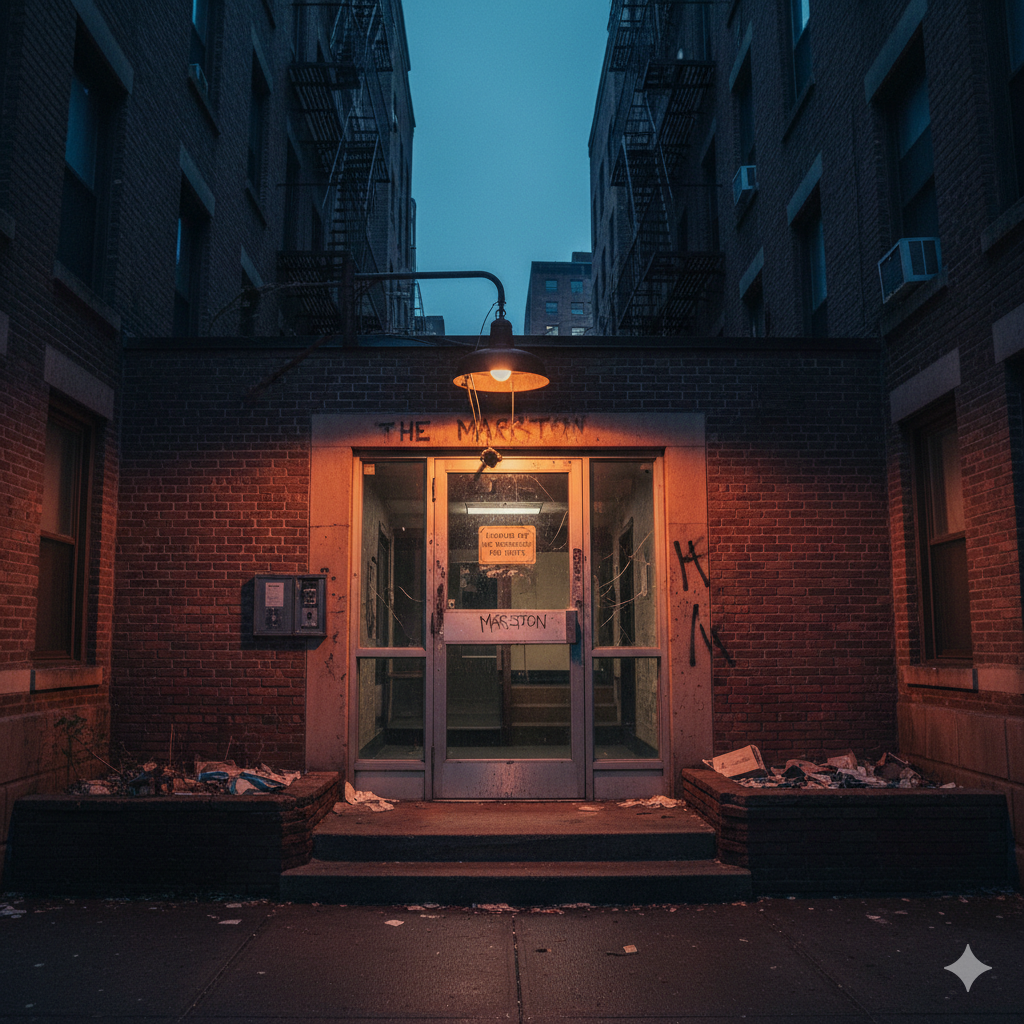
Building security failures in New York City create serious risks for residents and visitors. Inadequate lighting in stairwells, broken entry locks, malfunctioning intercoms, and poorly maintained common areas can lead to assaults, slips and falls, and other preventable injuries. As fall arrives and daylight hours shrink, security vulnerabilities that went unnoticed during summer become dangerous. Exterior lights that functioned adequately at 7 PM in July now leave building entrances pitch-black by 5:30 PM in October.
Property owners and landlords owe tenants and lawful visitors a legal duty to maintain reasonably safe premises. When they fail to provide adequate security measures—and someone gets hurt as a result—they may be held liable for resulting injuries and damages. Dansker & Aspromonte LLP has represented hundreds of premises liability victims across New York City, including tenants injured in the Schomburg Plaza fire, where inadequate building safety systems contributed to smoke-inhalation injuries affecting 60 residents.
This guide explains your legal options when building security fails, identifies who can be held responsible, and provides practical steps to protect your claim. We’ve organized common security breaches, liability standards, and evidence requirements in comparison tables below to help you understand your rights and the strength of your potential case.
⚠️ Seasonal Alert: Fall Security Risks
As daylight saving time ends and darkness arrives earlier, building security vulnerabilities intensify. Property owners must adapt lighting systems, entrance monitoring, and walkway maintenance to address seasonal hazards. Injuries occurring during these predictable seasonal transitions may strengthen negligence claims.
Understanding the Duty to Protect in NYC Buildings
NYC landlords and building owners owe tenants and lawful visitors a legal duty to maintain reasonably safe premises (NYC Building Code), including adequate security measures. This duty stems from their control over the property and their superior ability to identify and remedy hazards. The standard is not perfection—property owners are not insurers of tenant safety—but they must act reasonably to address known risks and prevent foreseeable harm (Nallan v. Helmsley-Spear, Inc.).
The duty to protect intensifies when prior incidents make future harm foreseeable. If a building has experienced break-ins, assaults, or other security breaches, the owner’s obligation to implement preventive measures increases accordingly. Courts evaluate whether the property owner knew or should have known about security deficiencies through reasonable inspections, tenant complaints, or crime reports in the surrounding area. A landlord who ignores repeated complaints about a broken lobby door lock may face liability when an intruder subsequently enters through that door and assaults a tenant.
Residential buildings face different standards than commercial properties. While both types of property owners must maintain safe conditions, residential landlords have heightened duties under the NYC Housing Maintenance Code and the Multiple Dwelling Law. Under the NYC Housing Maintenance Code, Title 27, Chapter 2, landlords in New York City must keep their premises in good repair (§ 27-2005) and are required to provide specific security devices such as a key lock, heavy‐duty deadbolt, and chain door guard on entrance doors (§ 27-2043).
Our firm’s experience with the Schomburg Plaza fire demonstrates how failure to maintain basic safety systems creates liability. When a fire started in a jammed compactor chute on the 20th floor, inadequate alarm systems and poor emergency protocols left residents trapped in smoke-filled hallways. We secured an $8 million recovery for 60 tenants who suffered smoke inhalation injuries (Dansker & Aspromonte LLP, 2024). The case illustrated that property owners cannot delegate their fundamental duty to provide safe living conditions.
When property owners ignore known risks or fail to implement reasonable security measures, they may be held liable for resulting injuries. The key question is always foreseeability: Would a reasonable property owner have anticipated this type of harm and taken steps to prevent it?
Common Types of Building Security Failures
Security breaches in NYC buildings fall into distinct categories, each with specific liability considerations and evidence requirements. Understanding these failure types helps tenants recognize when a property owner has breached their duty to protect and strengthens the foundation for legal claims.
Comparison Table: Building Security Failure Types
| Security Failure Type | Common Examples | Evidence Needed | Typical Liable Party |
|---|---|---|---|
| Inadequate Lighting | Broken hallway lights, dark stairwells, unlit exterior entries, burned-out bulbs in parking areas | Prior tenant complaints, maintenance request records, time-stamped photos, and witness statements | Landlord/Property Manager |
| Defective Locks/Entry Systems | Broken lobby doors, non-functioning intercoms, missing apartment door locks, and damaged security gates | Repair request documentation, email/text complaints, photos of broken hardware, witness testimony | Landlord/Building Owner |
| Unsafe Common Areas | Obstructed fire exits, broken stair railings, hazardous flooring, accumulated debris, ice/snow on walkways | Building inspection reports, prior incident reports, photos of conditions, and NYC housing code violations | Owner/Management Company |
| Lack of Security Monitoring | No security personnel in high-crime areas, non-functional cameras, unmonitored entry points, and missing visitor logs | Prior crime reports in the building, lease security provisions, industry standards for similar buildings, and neighborhood crime statistics | Owner/Security Contractor |
Data based on NYC premises liability cases handled by Dansker & Aspromonte LLP. Examples reflect common breach patterns documented in our case files.
Multiple security failures often exist simultaneously, creating compounded risk. A building with both inadequate lighting and a broken lobby door presents far greater danger than either deficiency alone. An intruder who enters through a broken door in a darkened hallway faces minimal detection risk, making criminal acts more foreseeable. When evidence shows overlapping security deficiencies, liability claims strengthen because the property owner’s negligence becomes more obvious and the harm more predictable.
Courts recognize that some security failures are more egregious than others. A landlord who ignores a broken apartment door lock for six months after receiving multiple tenant complaints demonstrates deliberate indifference to tenant safety. This pattern of neglect may support claims for punitive damages, a category of damages intended to punish offenders rather than just compensate victims, in addition to claims for compensatory damages. By contrast, a light bulb that burns out one day before an incident may not establish sufficient notice for liability, unless the property owner had no reasonable inspection system in place.
Evidence preservation is critical in security failure cases because property owners often rush to repair defects immediately after an incident. A broken lock that remains unfixed for months gets replaced within 24 hours of an assault. Photographs taken before repairs, written complaints documenting the timeline, and witness statements from other tenants who noticed the same problem all become essential proof that the condition existed and the landlord had notice.
Multiple security failures strengthen negligence claims by demonstrating a pattern of disregard for tenant safety rather than an isolated oversight. This kind of pattern shows that the landlord was aware of dangerous conditions and chose not to fix them, which juries often interpret as a reckless or willful disregard for tenant safety rather than mere negligence. When we represent premises liability clients, we investigate not only the specific defect that caused the injury but also the overall security environment and the property owner’s maintenance history.
Seasonal Vulnerabilities: Fall and Winter Security Risks
As daylight hours shrink in fall, lighting deficiencies that went unnoticed in summer become dangerous security vulnerabilities. Exterior building lights that seemed adequate when the sun set at 8 PM in June now leave entrances pitch-black by 5:30 PM in October. Tenants returning from work after dark face risks from inadequate illumination in stairwells, hallways, and parking areas. Under the New York City Housing Maintenance Code, landlords must keep public areas properly illuminated at all times (§ 27-2038) and maintain entrance lighting from sunset to sunrise (§ 27-2040. Property owners who fail to adjust lighting systems for seasonal changes create foreseeable hazards.
Weather transitions between fall and winter introduce additional security complications. Rain and early snow affect door functionality, causing locks to freeze or malfunction. Building managers sometimes prop open doors for ventilation during HVAC system changeovers, creating unsecured entry points. Wet leaves accumulate at building entrances, making walkways slippery and obscuring hazards like uneven pavement or broken railings. These seasonal conditions compound existing security deficiencies and create new opportunities for premises liability.
Reduced foot traffic during colder months eliminates natural surveillance that occurs when residents spend time outdoors. Empty courtyards, deserted lobbies during evening hours, and fewer pedestrians on sidewalks make buildings more attractive targets for criminal activity. Property owners must compensate for reduced natural monitoring by ensuring security systems function properly and common areas remain well-lit and accessible only to authorized individuals.
Ice and snow accumulation represents one of the most common seasonal security failures. Our firm secured a $1.2 million recovery for a security guard who fell on ice at a building owned by Metropolitan Life Insurance Company (Dansker & Aspromonte LLP, 2024). The property owner failed to salt walkways or remove accumulated ice from the entrance, creating a hazardous condition that resulted in a fractured knee requiring surgery. When winter weather creates known slip hazards, property owners must take prompt action to protect tenants and visitors.
📋 Case Study: $1.2 Million Ice Fall Recovery
A security guard employed at a Manhattan building suffered a fractured knee when he slipped on untreated ice at the building entrance. The property owner, Metropolitan Life Insurance Company, had received multiple complaints about ice accumulation but failed to salt the walkway or remove the hazard. Our firm secured a $1.2 million recovery, demonstrating that property owners cannot ignore known seasonal hazards without facing liability for resulting injuries.
Dansker & Aspromonte LLP, 2024
Building access systems require seasonal maintenance that property owners often neglect. Electronic key fobs malfunction in extreme cold. Door closers freeze in winter temperatures, leaving exterior doors ajar. Heating system repairs may require contractors to leave service entrances unlocked for extended periods. Each of these seasonal issues creates security vulnerabilities that property owners must address through increased monitoring, prompt repairs, and alternative safety measures.
Property owners must adapt security measures to seasonal conditions or face liability for foreseeable injuries. Courts recognize that reasonable security standards change with weather and daylight patterns. A lighting system adequate in June becomes insufficient in December when darkness arrives three hours earlier. Property owners who ignore seasonal vulnerabilities demonstrate negligence when those predictable conditions lead to tenant injuries.
Who Can Be Held Liable for Security Failures?
Multiple parties may share liability when building security fails in NYC. Determining who bears legal responsibility requires examining the relationships between property owners, management companies, security contractors, and tenants. Each entity owes different duties based on its level of control over the premises and its contractual obligations.
Comparison Table: Responsible Parties in Building Security Cases
| Responsible Party | Primary Duty | Common Defense | When Liable |
|---|---|---|---|
| Building Owner | Maintain safe premises, comply with housing codes, and ensure adequate security systems | “No actual notice of defect,” “Management company responsible for daily operations” | Knew or should have known of the hazard through reasonable inspections or tenant complaints |
| Property Management Company | Day-to-day maintenance, respond to tenant complaints, and conduct regular inspections | “Owner retained control over major repairs,” “Limited by management agreement scope” | Failed to act on known issues within a reasonable timeframe or neglected inspection duties |
| Security Contractor | Provide agreed-upon security services, monitor premises, and respond to incidents | “Services limited by contract terms,” “Property owner failed to authorize necessary measures” | Breached contract terms, provided negligent security services, or failed to report known hazards |
| Individual Landlord | All maintenance and security duties, unless delegated by a valid contract | “Tenant caused condition,” “No notice of defect,” “Defect arose suddenly” | Actual or constructive notice of a dangerous condition through complaints, inspections, or obvious defects |
Framework based on NYC premises liability standards and case law governing property owner duties.
Constructive notice means the property owner should have discovered the hazard through reasonable inspections, even without receiving specific complaints. A hallway light that has been broken for three months creates constructive notice because any reasonable inspection system would have detected the problem. Property owners cannot avoid liability by claiming ignorance when hazards would be obvious to anyone conducting routine maintenance checks.
Management companies often attempt to shift blame to building owners when security failures occur. They argue their contracts limit responsibility to minor repairs or that the owner retained control over major security decisions. However, NYC courts hold that management companies accepting responsibility for day-to-day operations assume corresponding duties to address security deficiencies. When a management company receives tenant complaints about a broken lobby door and fails to act, they may share liability with the building owner regardless of contractual provisions limiting their authority.
Security contractors face liability when they breach their contractual obligations or provide negligent services. A security guard who abandons their post, allowing an intruder to enter the building, may be personally liable along with their employer. Similarly, a security company that installs defective camera systems or fails to monitor surveillance footage as promised can be held responsible when those failures contribute to tenant injuries. The key question is whether the contractor met the standard of care expected of professional security services.
Multiple defendants commonly appear in building security cases because liability rarely falls on a single party. An assault in a building lobby might result in claims against the building owner for failing to repair a broken door lock, the management company for ignoring tenant complaints about the lock, and the security company for failing to monitor the entrance as required by contract. Each defendant bears a percentage of fault based on their role in creating or allowing the hazardous condition.
Lease provisions sometimes attempt to shift security responsibilities to tenants or limit landlord liability. NYC law limits the enforceability of such clauses, particularly in residential leases. Courts generally refuse to enforce lease terms that would relieve landlords of their fundamental duty to maintain safe premises. A clause stating “Tenant accepts premises as-is and assumes all security risks” will not protect a landlord from liability when inadequate building security leads to tenant injury. This principle is reflected in New York’s warranty of habitability, which requires safe and livable premises, including adequate security measures.
Building Your Negligent Security Case
Strong premises liability cases require immediate documentation of both the security failure and resulting injury. Evidence deteriorates rapidly after incidents occur—property owners repair defects, surveillance footage gets overwritten, and witness memories fade. Tenants who act quickly to preserve evidence significantly improve their chances of recovering full compensation.
Evidence Collection Steps
- Document the Scene Immediately
- Why: Conditions change quickly as property owners rush to make repairs after incidents, eliminating proof that the hazard existed.
- Outcome: Time-stamped photographs and videos establish the pre-repair state of broken locks, inadequate lighting, or hazardous conditions.
- Report to Building Management in Writing
- Why: Written complaints create an official record and establish the exact date the landlord received notice of the security deficiency.
- Outcome: Email or certified letter confirms the property owner knew about the hazard and had the opportunity to remedy it before your injury. Residents can also file complaints directly through NYC 311 Online if management fails to respond.
- Obtain All Incident Reports
- Why: Security logs, 911 call records, and police reports provide third-party documentation that corroborates your account of events.
- Outcome: Official reports carry significant weight as neutral evidence that the incident occurred as described.
- Identify Witnesses
- Why: Other tenants may have complained about the same security deficiency, establishing a pattern of notice to the landlord.
- Outcome: Multiple witnesses strengthen negligence claims by showing the hazard was obvious and longstanding rather than a sudden occurrence.
- Preserve All Medical Records
- Why: Medical documentation links your injuries directly to the security failure and establishes the severity of harm suffered.
- Outcome: Complete medical records prove both causation and the full extent of damages, supporting claims for past and future treatment costs.
Prior complaints from other tenants about the same security deficiency dramatically strengthen liability claims. If ten tenants reported a broken lobby door over six months, the landlord cannot credibly claim lack of notice. Under New York’s public policy favoring broad discovery, your attorney can subpoena all relevant documents, including building maintenance records, complaint logs, and communications between tenants and management to establish this pattern. Buildings with documented histories of security incidents face higher duties to implement preventive measures. Surveillance footage provides powerful evidence but disappears quickly. Most building security systems overwrite recordings after a short period—sometimes as brief as a few days or weeks. Tenants or their attorneys should immediately request, in writing, that any surveillance footage and related records be preserved under New York’s civil discovery rules.
Request preservation of footage immediately after an incident, preferably in writing to building management and any security company. If the property owner fails to preserve footage after receiving notice of a potential claim, courts may allow negative inferences that the footage would have supported your version of events.
Time limits apply to premises claims in NYC. There are strict deadlines, set forth in §50-e of the General Municipal Law, for commencing a lawsuit or giving official notice if a government agency is involved. These timelines differ depending on who owns or manages the property and who is injured. Missing them can mean losing your right to compensation, even if your case is strong. Private property cases generally allow more time, while claims against city-owned or public buildings often require formal notice to the city within a specified timeframe. Speak with an attorney as quickly as possible after any injury to avoid missing a filing window.
Early evidence gathering significantly strengthens your position before the property owner can remedy the hazard or dispute the notice. Once a landlord learns that a tenant intends to pursue a claim, repairs happen immediately. The broken lock that remained unfixed for months gets replaced within hours. Without photographs or witness statements documenting the prior condition, proving that the security failure existed becomes far more difficult. Victims who wait weeks or months to consult an attorney often find that critical evidence has vanished.
What Compensation Can You Recover?
Victims of negligent building security may recover multiple categories of damages designed to make them whole after preventable injuries. NYC premises liability law recognizes both economic losses with calculable monetary values and non-economic harm that, while real, cannot be precisely quantified.
Medical expenses represent the most straightforward category of recoverable damages. This includes all reasonable and necessary treatment costs arising from the security failure: emergency room visits, surgeries, hospital stays, prescription medications, physical therapy, medical equipment, and home healthcare services. Victims can recover both past medical expenses already incurred and future medical costs that doctors expect will be necessary. A tenant who suffers a traumatic brain injury due to inadequate building lighting may require ongoing neurological care for years, creating substantial future medical damages.
Lost wages compensate victims for income lost due to their injuries. This includes time missed from work for medical treatment, recovery periods, and any permanent reduction in earning capacity. A construction worker who suffers a fractured hip in a building stairwell fall may miss months of work during recovery and face permanent limitations affecting future employment. Economic experts can calculate lifetime earning capacity losses for victims whose injuries prevent them from returning to their former occupations.
Pain and suffering damages compensate victims for physical pain, emotional distress, and reduced quality of life resulting from their injuries. NYC juries determine these amounts based on injury severity, recovery duration, and impact on daily activities. A tenant who develops post-traumatic stress disorder after an assault in a building with inadequate security may recover substantial pain and suffering damages reflecting the psychological harm suffered. Unlike medical bills and lost wages, pain and suffering damages have no predetermined formula, making experienced legal representation critical to maximizing recovery.
Property damage claims arise when personal belongings are damaged or stolen due to security failures. If an intruder enters through a broken lobby door and burglarizes an apartment, the tenant can recover the value of stolen items and damage to their unit. Similarly, a slip and fall on an icy building entrance might damage a laptop or smartphone, creating additional recoverable losses.
Our firm has secured significant compensation for premises liability victims across all damage categories. These recoveries include a $1.2 million settlement for a fall on ice at a building entrance and an $8 million recovery for 60 tenants who suffered smoke inhalation injuries in the Schomburg Plaza fire, where inadequate building safety systems contributed to their harm (Dansker & Aspromonte LLP, 2024). Each case involves unique circumstances, and compensation depends on multiple factors, including injury severity, the degree of the defendant’s fault, and the quality of evidence supporting the claim.
Insurance coverage often limits actual recovery amounts regardless of verdict or settlement values. Property owners typically carry liability insurance with policy limits ranging from hundreds of thousands to several million dollars. When damages exceed policy limits, victims may pursue the property owner’s personal assets, though collection becomes more difficult. Cases involving multiple defendants with separate insurance policies generally offer better prospects for full recovery because total available coverage increases.
Compensation depends on injury severity, defendant’s fault level, and quality of evidence, making experienced representation critical. Attorneys familiar with NYC premises liability law understand how to value cases accurately, present evidence persuasively, and negotiate effectively with insurance companies and defense counsel. Property owners and their insurers routinely dispute liability and minimize claimed damages, requiring skilled advocacy to achieve fair compensation for injured tenants and visitors.
Frequently Asked Questions About Building Security Negligence
How long do I have to file a claim for building security negligence in NYC?
Strict time limits apply and vary depending on whether the building is privately owned or managed by a government entity. Private property claims generally must be filed within several years, while government-owned properties may require formal notice within a much shorter period. Consult an attorney immediately after your injury, as waiting can forfeit your legal rights entirely.
What if the building owner claims they didn’t know about the security issue?
NYC law holds property owners liable if they knew or should have known about the hazard through reasonable inspections or prior complaints. Your attorney can uncover evidence of constructive notice, including maintenance records showing the defect existed for an extended period, prior tenant complaints documenting the same problem, and inspection schedules proving the owner should have discovered the hazard. Property owners cannot avoid responsibility by deliberately ignoring obvious security deficiencies.
Can I sue if I was injured by another person due to inadequate building security?
Yes. If the property owner failed to provide reasonable security measures and that failure made a criminal act foreseeable, you may have a premises liability claim against the landlord in addition to any claim against the perpetrator. Foreseeability depends on whether the building had prior security incidents, the neighborhood crime rate, and whether the owner ignored known security deficiencies. The property owner’s duty to protect intensifies when circumstances make criminal activity predictable.
Do I need to prove the landlord violated a specific building code?
Not necessarily. While code violations strengthen your case significantly, liability can exist even without a specific violation if the security measures fell below reasonable standards given the building’s location, history of incidents, and known risks. Courts evaluate whether the property owner acted reasonably under the circumstances. However, documented code violations provide clear evidence of negligence and make settlement negotiations more favorable, as property owners face difficulty defending acknowledged violations of safety standards.
Injured Due to Negligent Building Security?
Time limits apply to premises liability claims. Preserve your evidence and protect your rights by consulting experienced NYC premises liability attorneys.
Protecting Your Rights After Building Security Failures
Building security failures in NYC create serious risks that property owners have a legal duty to prevent. When landlords and building owners ignore inadequate lighting, broken locks, unsafe common areas, or other security deficiencies, they may be held liable for resulting tenant injuries (NYC Bar Association — Premises Liability Overview). As seasonal changes bring shorter daylight hours and weather-related hazards, security vulnerabilities that seemed minor in summer become dangerous conditions requiring immediate attention.
Your legal rights depend on prompt action to document security failures, preserve evidence, and consult experienced counsel before critical deadlines expire. Property owners who breach their duty to protect tenants face liability for medical expenses, lost wages, pain and suffering, and other damages arising from preventable injuries. Multiple parties may share responsibility, including building owners, management companies, and security contractors, creating opportunities to maximize recovery through strategic identification of all liable defendants.
Dansker & Aspromonte LLP has represented premises liability victims throughout New York City for decades, securing substantial compensation for tenants injured by negligent building security. If you have suffered injuries due to inadequate building security measures, contact our firm for a consultation to discuss your legal options and protect your right to fair compensation.
Resources & References
Nallan v. Helmsley-Spear Case on vLex:
https://case-law.vlex.com/vid/nallan-v-helmsley-spear-884451541
NYC Energy Conservation Code:
https://www.nyc.gov/site/buildings/codes/energy-conservation-code.page
NYC Bar Premises Liability Lawyer Info:
https://www.nycbar.org/get-legal-help/article/personal-injury-and-accidents/premises-liability/
OSHA Lighting Regulation 1915.82:
https://www.osha.gov/laws-regs/regulations/standardnumber/1915/1915.82
NYC Housing Maintenance Code Violations – NYC Open Data:
https://data.cityofnewyork.us/Housing-Development/Housing-Maintenance-Code-Violations/wvxf-dwi5
NYC Local Laws Portal – Department of Buildings:
https://www.nyc.gov/site/buildings/codes/local-laws.page
NYC Admin. Code § 27-2005 – Owner’s Duty to Maintain Premises
https://codelibrary.amlegal.com/codes/newyorkcity/latest/NYCadmin/0-0-0-60147
NYC Admin. Code § 27-2043 – Locks and Security Devices for Dwelling Entrances
https://codelibrary.amlegal.com/codes/newyorkcity/latest/NYCadmin/0-0-0-60477
NYC Admin. Code § 27-2038 – Lighting in Public Halls and Stairs
https://codelibrary.amlegal.com/codes/newyorkcity/latest/NYCadmin/0-0-0-60455
NYC Admin. Code § 27-2040 – Entrance and Exterior Lighting Requirements
https://codelibrary.amlegal.com/codes/newyorkcity/latest/NYCadmin/0-0-0-60455
N.Y. Gen. Mun. Law § 50-e – Notice of Claim Requirement for Municipal Defendants
https://www.nysenate.gov/legislation/laws/GMU/50-E