
New York City Personal Injury Law Firm
NYC Dog Bite Lawyer
Bitten by a dog in New York City? You may be entitled to compensation for your medical bills, lost wages, and pain and suffering.
Dansker & Aspromonte represents dog bite victims throughout New York City. We hold negligent dog owners accountable and work on contingency – no fees unless we win your case.
(212) 732-2929 – Free Consultation
No fee unless we recover compensation for you. Or use our contact form.
Attorney of Record
Salvatore Aspromonte – Managing Partner
Admitted: New York State Bar | View attorney profile and credentials
Dansker & Aspromonte Associates LLP | 30 Vesey Street, 16th Floor, New York, NY 10007
Last Updated
June 2026 | View all practice areas
This page explains how dog bite claims work in New York City and what injured victims should do after an attack.
Important legal notice: This page is for general informational purposes only and is not a substitute for legal advice. Every dog bite claim depends on the facts, the parties involved, the victim\’s age, and applicable filing deadlines. Consult a qualified New York attorney about your specific situation.
This page covers
- NYC and New York State dog bite liability law
- The one-bite rule vs. strict liability distinction
- Filing deadlines and notice requirements
- Prevention strategies and steps after a bite
This page does not cover
- Criminal charges against dog owners
- Non-bite animal injuries (scratches, knockdowns may qualify – contact us)
- Dog bite incidents outside New York
See the legal notice above and the attorney advertising disclaimer below before relying on any general legal information.
Attorney Advertising. Prior results do not guarantee a similar outcome. This page is for informational purposes only and does not constitute legal advice. Consult a qualified attorney regarding your individual situation. Viewing this page does not create an attorney-client relationship. The information on this page may not reflect the most current legal developments. Dansker & Aspromonte Associates, LLP disclaims all liability for actions taken or not taken based on any content on this site.
Do You Have a Dog Bite Claim?
You may have a dog bite claim in New York if one or more of the following applies to your situation:
A dog owned by another person bit or attacked you in New York City or New York State
The owner knew or should have known the dog had aggressive tendencies based on prior behavior
The dog was off-leash or uncontrolled in a public space in violation of NYC Health Code § 161.05
You required medical treatment as a result of the bite or attack
A child under 18 was the victim – special tolling rules may extend the filing deadline
Every case depends on its specific facts. Contact us to discuss whether your situation qualifies.
Key Legal Terms in Dog Bite Cases
Understanding these terms helps clarify how New York applies liability in dog bite cases.
| Term | Definition |
|---|---|
| One-Bite Rule | A legal doctrine holding dog owners liable only if they knew or should have known their dog had vicious propensities based on prior behavior. |
| Strict Liability | Legal responsibility for damages without requiring proof of negligence or prior knowledge. In New York, applies to medical costs when a dog is classified as “dangerous.” |
| Dangerous Dog | Under New York law, a dog with a history of attacking people or animals without justification, or that behaves in a manner suggesting a serious threat. Determined by the court based on the dog’s prior behavior. |
| Statute of Limitations | The legal deadline by which an injured person must file a lawsuit. The deadline varies based on the type of claim, who the defendant is, and the injured person’s age. Consult an attorney immediately – missing this deadline can permanently bar your right to sue. |
Dog Bite Statistics in New York City
A 2020 study found that the rate of dog bite injuries rose from 2005 to 2011, then declined both nationwide and in New York State.[1] In 2014 – the most recent year for which the New York City Department of Health and Mental Hygiene (DOHMH) published these statistics – nearly 3,200 dog bites were reported among New York City residents.[2]
These figures likely undercount the true scope of the problem. New York law requires healthcare workers and bite victims to report dog bites to local health authorities as part of the state’s efforts to prevent diseases such as rabies.[3] Studies indicate that only about 17–18% of dog bite injuries receive medical attention, meaning the majority of bites never enter medical or legal reporting systems.[4]
NYC Dog Bite Laws and Liability
Dog bites fall under New York’s personal injury law framework, which imposes specific obligations on dog owners and gives injured victims multiple paths to compensation.
Dog bite cases can overlap with other serious injury claims. A child victim may need the protections discussed in our New York child injury lawyer resource, while severe scarring, infection, nerve damage, or permanent impairment may raise issues covered in our catastrophic injury guidance.
New York City Laws & Regulations
New York law imposes specific obligations on dog owners to promote public safety. Dog owners must obtain a license for each dog they own, and that dog must wear its license tag when in public.[5] NYC Health Code requires every dog to be on a leash no longer than six feet when in a public space or in an unfenced area adjacent to a public space.[6] Under New York State law, every dog must be vaccinated for rabies, and vaccines must be kept current.[7]
New York’s Hybrid Approach to Dog Bite Liability
Most states apply either the one-bite rule or strict liability to dog bite cases. New York is unusual in using a hybrid of both.
New York has traditionally applied the one-bite rule: a dog owner who knew, or should have known, that their dog had vicious propensities is legally liable for harm resulting from those propensities.[8]
New York also has a statute that holds owners of “dangerous dogs” strictly liable for medical costs resulting from injury caused by their dog to any person or other animal.[9] Strict liability means the owner is financially responsible for the victim’s medical bills if the victim proves the dog attacked them and they incurred medical expenses. What the owner knew or should have known about the dog’s tendencies does not matter.
That strict liability statute is limited to medical costs tied to a dangerous dog finding. Claims for lost wages, pain and suffering, scarring, disfigurement, emotional distress, and other broader damages may require proof that the owner knew or should have known about the dog\’s vicious propensities or another legally recognized basis for liability.
The one-bite rule and strict liability are related but distinct. Under both, prior behavior matters – but what must be proven differs. The one-bite rule requires proof that the owner knew or should have known the dog was dangerous – a mental state requirement applied to the owner. Strict liability works differently: a court must first formally classify the dog as “dangerous” based on its prior behavior,[9] regardless of what the owner knew or acknowledged.[8] The key distinction is what each party must prove, not whether prior behavior is relevant.
New York’s Statute of Limitations in Dog Bite Cases
New York law imposes strict deadlines on personal injury lawsuits.[14] Missing the deadline can permanently bar your right to sue. Consult an attorney as soon as possible after a bite to ensure all filing deadlines are met.
THE TIME TO SUE CAN VARY FROM CASE TO CASE. ALWAYS CONSULT AN EXPERIENCED ATTORNEY TO DETERMINE THE TIME FRAME THAT APPLIES TO YOUR CASE AS SOON AS POSSIBLE AFTER THE INCIDENT.
Any statute of limitation or condition precedent such as a notice of claim cited herein may not apply to your particular case. The time to bring a lawsuit and the conditions upon which it may be brought depend upon many factors including the age and mental capacity of the injured person, whether the party to be sued is a private person, partnership, corporation, government entity or other legal entity, the substance and type of claim being made, the place of the accident, and other possible factors. You are advised to call to confirm the time limits and conditions that apply to your case as soon as possible.
There is an important exception in dog bite cases: the statute of limitations does not run against minors.[15] The filing clock generally does not begin until the child turns 18 – but the exact deadline depends on who the defendant is, the type of claim, and the specific facts of the case. Consult an attorney immediately to confirm the deadline that applies to your situation.
Bitten by a Dog in New York City?
New York law imposes strict deadlines. The sooner you speak with an attorney, the better protected your rights are. Consultations are free and there is no fee unless we win.
Prevention Strategies for NYC Public Spaces
Dog bites are common but often preventable. Proactive awareness in public spaces reduces your risk significantly.
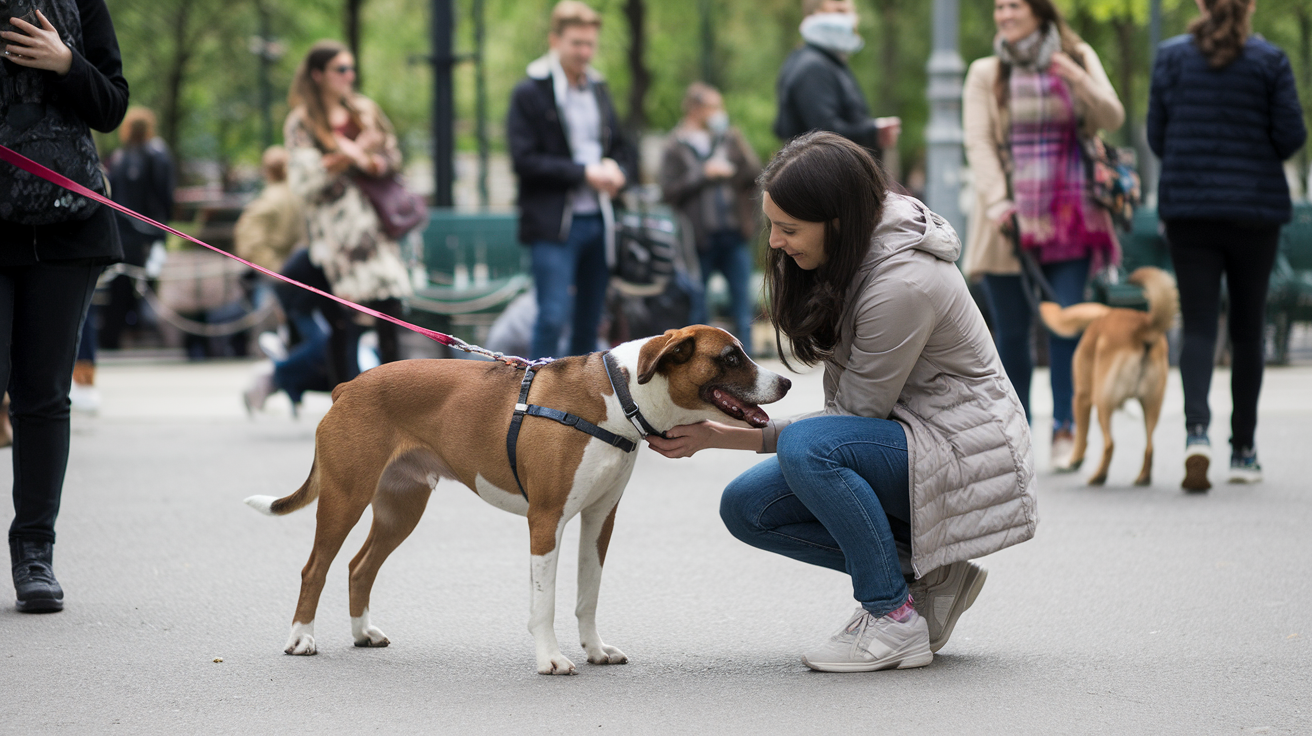
Navigate Crowded Parks & Sidewalks Safely
Here are practical steps to safely interact with dogs in public spaces:
- Always ask an owner for permission before petting a dog.
- Extend your hand gently so the dog can smell you before you make contact.
- Give leashed dogs enough space so they do not feel threatened.
- Never reach out to pet a dog you do not know.
- Move slowly and calmly – sudden movements can startle a dog.
- Pay attention to your surroundings to spot off-leash dogs in city parks.
- Avoid stray dogs.
- Place a barrier between yourself and the dog if you feel threatened.
- If threatened, do not run – back away at a slow, steady pace without turning your back.
Warning Signs in Dogs & Canine Behavior
Most dogs display warning signs before biting: growling, bared teeth, raised hackles, intense staring, or a stiffened posture.
Context matters. Never approach a dog that is confined, tethered, or guarding an object. Do not interrupt a dog – particularly one you don’t know – while it is eating, sleeping, or caring for puppies. Intervening in a dog fight significantly increases your risk of serious injury.
Keeping Children Safe Around Dogs
Children are the most common victims of dog bites in New York.[2] DOHMH data shows the bite rate was 1.5 times as high among children under 17 as among adults, with children between 5 and 12 showing the highest bite rate.[2]
The most effective protection is teaching children how to behave around dogs and supervising every interaction. Teach children to ask permission before petting any dog, approach calmly, and pet gently – no hugging or kissing. Teach them to back away slowly if they see growling, bared teeth, a stiff body posture, a tucked tail, pinned ears, or a dog avoiding eye contact.
If you choose to own a dog, research breeds for temperament, train and socialize the dog after bringing it home, and select a breed appropriate for your family and living situation. Learn more about reporting a dog bite in New York on our blog.
Contact Animal Control After a Dog Bite
New York law (10 NYCRR § 2.14) requires healthcare providers and bite victims to report dog bites to local health authorities. When you report, provide the owner’s name if known, the dog’s breed, a description of the attack, and any medical documentation.
After you report, the agency will investigate to determine whether the animal must undergo a mandatory rabies observation period. The investigation may also reveal a history of aggression, causing the dog to be classified as dangerous. The owner may face consequences including fines, mandatory behavioral training for the dog, and – in the most serious cases – humane euthanasia.
Special Considerations for Dog Owners
Dog bite claims affect owners as well as injured victims. The steps below explain immediate safety responsibilities, common defenses, and insurance issues that can shape how a New York dog bite claim is handled.
What to Do If Your Dog Bites Someone
After a dog bite, the owner’s immediate steps matter – both for the victim’s safety and for the owner’s legal position. New York law places responsibility on the owner to act after a bite occurs:
- Restrain the dog to prevent further injuries.
- Check on the victim to ensure they are okay.
- Ensure the victim washes and cleans the wound to reduce the risk of infection.
- Provide your contact information, the dog’s vaccination status, and your veterinarian’s contact information to the victim.
- Report the bite to the authorities.
- Evaluate the cause of the bite and take steps to prevent future incidents.
Legal Defenses Available to Dog Owners
New York law holds dog owners to a high standard, but owners are not without defenses. New York law allows the following:
- Provocation: A claim can fail if the injured person provoked the dog by teasing, hitting, or threatening it.[9]
- Trespassing: Injuries sustained while trespassing typically invalidate claims or reduce damages.[9]
- Lack of Knowledge: If the owner neither knew nor reasonably should have known about the dog’s vicious tendencies, this defense can be raised to dispute liability.[21]
Insurance Protections for Dog Owners
Insurance protects dog owners – not just injured parties – when a bite claim arises. An uninsured owner may be personally responsible for the victim’s medical bills, court-awarded damages, and their own legal costs. Several types of policies provide protection:
- Homeowners’ and renters’ insurance offers personal liability coverage, but may exclude certain breeds or deny coverage if the dog has a history of aggression.
- Pet liability insurance is designed specifically to cover dog-related injuries, including medical expenses, legal fees, and damage awards – particularly useful for breeds often excluded from standard policies.
- Workers’ compensation insurance can apply when a dog bites an employee in the course of their work, triggering the employer’s workers’ comp policy.
Some policies also cover legal costs if the dog faces a dangerous dog classification proceeding.
How We Handle Your Dog Bite Case
After you contact Dansker & Aspromonte, here is what happens:
Free Consultation
A member of our legal team reviews where the bite happened, who owned or controlled the dog, your injuries, and any known prior aggression at no charge and no obligation.
Investigation
We gather medical records, photos, animal control reports, vaccination information, witness accounts, leash evidence, veterinary records, and prior bite or aggression history.
Liability Analysis
We assess whether New York\’s one-bite rule, the dangerous dog statute, a leash violation, property-control facts, or another legal theory supports your claim.
Demand & Negotiation
We prepare a demand supported by liability evidence, medical documentation, lost income records, scarring or disfigurement evidence, and applicable New York law, then negotiate with the owner\’s insurer or pursue litigation when necessary.
Trial if Necessary
If the insurer refuses a fair offer, we prepare the case for court, including proof of the dog\’s behavior history, your medical damages, and any long-term effects.
You pay nothing unless we recover compensation for you.
No Fee Unless We Win
There is no fee to speak with us, and no fee to hire us unless we recover compensation for you. Dansker & Aspromonte handles dog bite cases on a contingency fee basis.
Your free consultation covers: the facts of the incident, whether New York’s one-bite rule or strict liability statute applies, what documentation to preserve, and what your next steps should be. There is no obligation to retain us after the consultation.
If we take your case, you pay nothing out of pocket during the legal process. Our fee is a percentage of any recovery – we explain the exact terms before you sign anything.
What Our Clients Say
Prior results do not guarantee a similar outcome.
“They provide a more personal and genuine experience of a boutique firm, while they also offer and deliver the legal knowledge, expertise, services, and results like a larger firm… I was extremely pleased with the outcome of my case.”
– D.P.
“Sal and Ray are clearly highly skilled in handling injury cases and worked tirelessly behind the scenes to secure a large settlement on my behalf. I wound up receiving a settlement that was far higher than I ever expected.”
– P.M.
“The other party tried their best to avoid responsibility, but Mr. Hoffer stood firm and got me a very favorable settlement. This firm is the real deal – it almost seemed as if they took it personally that I was being dismissed.”
– T.M.
Frequently Asked Questions
What is New York’s one-bite rule for dog bites?
New York’s one-bite rule holds a dog owner liable if they knew or should have known their dog had vicious tendencies – based on prior biting, aggression, or threatening behavior. Owners who had no reason to anticipate aggression may have a defense, but prior incidents establish the knowledge courts look for.
Can I sue a dog owner in New York if I was bitten on public property?
Yes. NYC Health Code requires every dog to be on a leash no longer than six feet in public spaces. If an owner violated that rule and their dog bit you, the leash violation is relevant evidence. Liability depends on the specific facts, including whether the dog had a history of aggression.
How long do I have to file a dog bite lawsuit in New York?
New York law imposes strict deadlines on personal injury claims. The deadline varies depending on factors including who owns the dog, where the bite occurred, and the victim’s age. Do not wait – contact an attorney as soon as possible after a bite to protect your right to sue.
What compensation can I recover after a dog bite in New York?
Dog bite victims in New York may be entitled to compensation for medical expenses, lost wages, pain and suffering, scarring or disfigurement, and emotional distress. Medical costs may be recoverable under New York\’s dangerous dog strict liability statute. Broader damages may require proof of vicious propensities, negligence, or another legally recognized basis for liability. The specific damages recoverable depend on the severity of the injuries and the facts of the case.
Is a dog owner automatically liable if their dog bites someone in New York?
Not automatically. New York uses a hybrid system. Under the one-bite rule, liability requires proof the owner knew or should have known about the dog’s dangerous tendencies. Under the strict liability statute, owners of dogs classified as “dangerous” are liable for medical costs regardless of prior knowledge.
What should I do immediately after being bitten by a dog in New York?
Seek medical attention immediately. Report the bite to NYC Animal Care and provide the owner’s name, the dog’s breed, and any vaccination information you have. Document the scene with photos and preserve any clothing or items damaged in the attack. Contact a dog bite attorney before giving statements to the owner’s insurance company.
Your Information Is Confidential
Communications submitted through our consultation intake process are handled confidentially. The scope of attorney-client privilege and confidentiality depends on the circumstances of the engagement and applicable law. We do not share your information or the details of your matter with any third party without your consent. If your situation involves medical records, those are handled in compliance with all applicable privacy laws. Contact us to discuss your situation.
Contact a NYC Dog Bite Lawyer Today
If you were bitten by a dog in New York City, you may be entitled to compensation for your medical bills and, depending on the legal theory and facts, lost wages, pain and suffering, and more. Call Dansker & Aspromonte or use our contact form to schedule a free consultation. You pay nothing unless we recover for you.
Dansker & Aspromonte Associates LLP | 30 Vesey Street, 16th Floor, New York, NY 10007
Dansker & Aspromonte handles a broad range of personal injury cases throughout New York City.
Footnotes
Attorney Advertising. Prior results do not guarantee a similar outcome. This website is for informational purposes only and does not constitute legal advice. Consult a qualified attorney for advice regarding your individual situation. This website is not intended to create, and viewing it does not constitute, an attorney-client relationship. The information on this website may not reflect the most current legal developments and may be changed without notice. Dansker & Aspromonte Associates, LLP disclaims all liability for actions taken or not taken based on any content on this site.